As VoIP bloggers
Andy, Dan, Garrett, Greg, Jon, Ken, Rich and Tom attend the Internet Telephony Conference & Expo to discover and discuss all the latest trends in the VoIP industry, I decided to blog about one such new trend: Mobile VoIP.
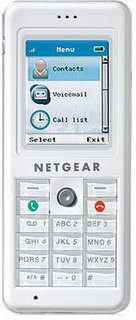 SPH101
Skype WiFi PhoneApparently, in VoIP 2.0 (or will it be 3.0 by then?), making calls from your PC will seem so impractical as to be laughable. Mobile calls will increasingly be made seamlessly over WiFi-enabled handsets, taking advantage of endless new features while long-distance rates will plummet lower than Bush's approval ratings in the Middle East.
This scenario assumes, of course, that wireless Internet (WiFi) will soon be as widespread as cellular signals are today. We already have WiFi at the office, at home, libraries, coffee shops, and so on. San Francisco, Philadelphia, New Orleans, Toronto, and Fredericton are all deploying city-wide WiFi access, with more surely following their lead. This future may not be too far away.
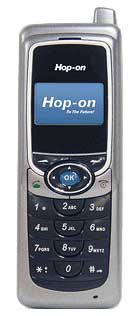 Hop-on HOP1515
SIP-WiFi PhoneAnd VoIP service providers are getting ready. Skype Mobile, Gizmo, Jajah Mobile, Rebtel, and Truphone have already begun marketing towards mobile phone users. With the right phone, you can already make very cheap calls or even free calls to other users within the same service. Calls to people outside your service will still be offered at low rates when compared to regular long-distance, but with the growing interoperability of VoIP providers, eventually a user of service A in California and a user of service B in Bombay could theoretically talk to each other using their mobile phones without paying a cent!
Now let's throw SIP into the mix. This open source protocol used by Vonage and Gizmo Project allows free communication between any two SIP-enabled devices, and cheap calls to non-SIP phones. And on the left we have the HOP1515, a SIP WiFi phone that's available for about $40. Can it get much cheaper than that?
 Paragon Wireless hipi-2200
Dual-mode Windows PhoneAlas, for now, we shall wait until VoIP providers all connect to one another, and until WiFi hotspots outnumber coldspots. Now we must still contend with GSM, CDMA and GPRS, and phones locked into their respective service providers and 2-year minimum contracts. We will have to put up with the headaches and confusion of the current mess of choices in mobile voice.
So while waiting for everything to become clear, you have yet another choice. If you want to use VoIP 2.0 services alongside your current cellular service, you'll probably want to get a dual-mode phone, capable of both cellular and WiFi. You may be interested in the "Hippie 2000", as pictured. Many PDA phones are dual-mode as well. I guess they'll have to suffice.
There are those who may question the business sense in having the ability to make extremely cheap or free calls to anyone around the world. They will eventually open their eyes, lest their eyes be opened for them.


{ 0 comments... Views All / Send Comment! }
Post a Comment